
September 30, 2026
MySQL BR Conf 2026 Slides: Managed ProxySQL in Your Own AWS Account
The final slides from René Cannaò and Alkin Tezuysal's session on ProxySQL.Cloud, BYOC architecture, configuration, and day-to-day operations.
Read more
The final slides from René Cannaò and Alkin Tezuysal's session on ProxySQL.Cloud, BYOC architecture, configuration, and day-to-day operations.

Connection pooling, replica freshness, MySQL GTID routing, and the application contracts behind safe SQL traffic routing.
dbdeployer v2.4.2 fixes MariaDB deployment delays and Galera/PXC readiness checks. Catch up on MariaDB downloads, PostgreSQL improvements, and testing since April.

A step-by-step technical walkthrough to reproduce the Percona Live demo — provision a Linux VM on macOS, deploy PostgreSQL 16–18 sandboxes with dbdeployer, wire ProxySQL, run pgbench, and inspect proxy-side stats.
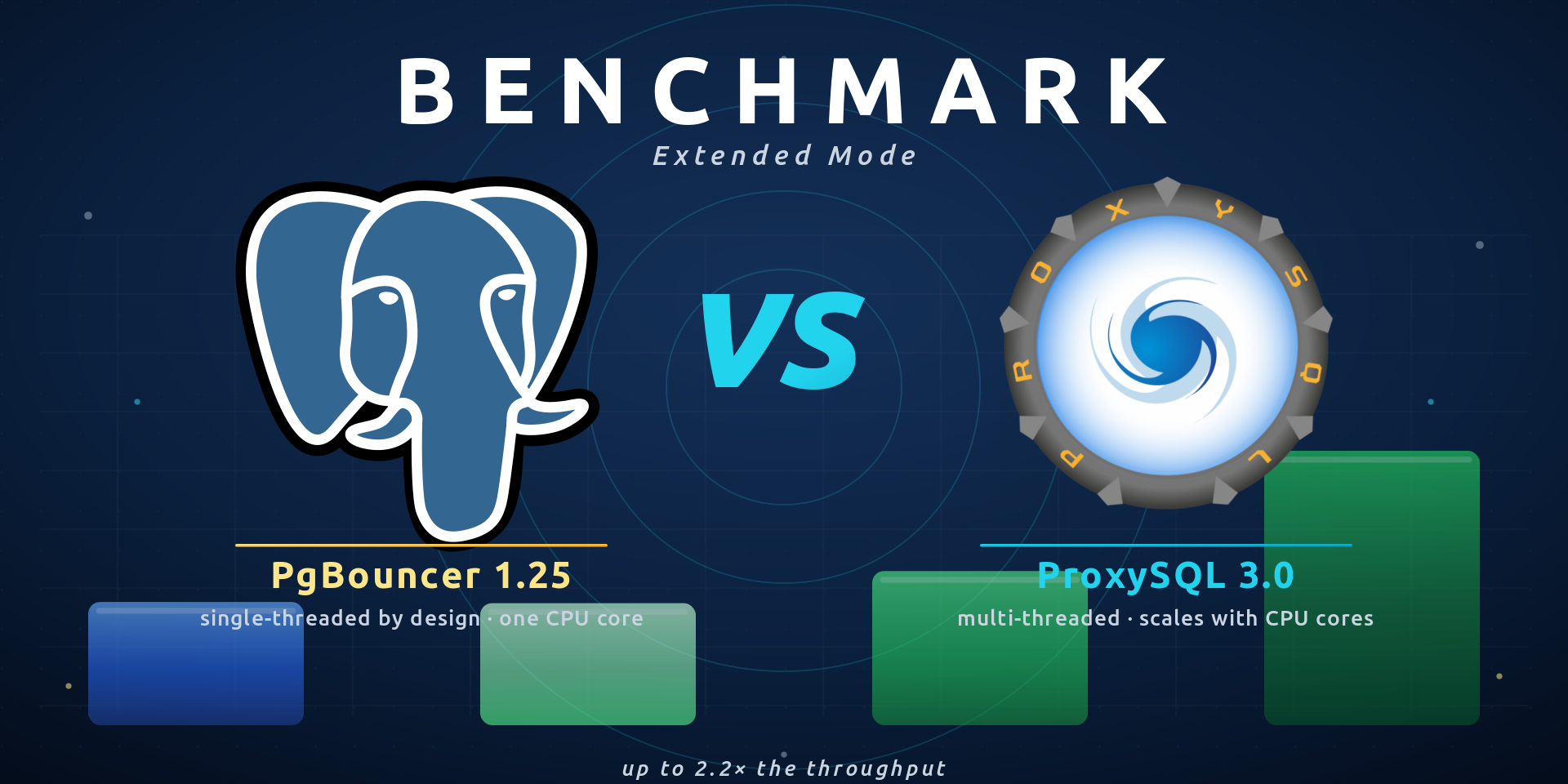
Part 4 of the PgBouncer to ProxySQL series. Benchmarks ProxySQL and PgBouncer under PostgreSQL's extended and prepared query protocols. ProxySQL keeps the lead and widens it as worker threads increase.
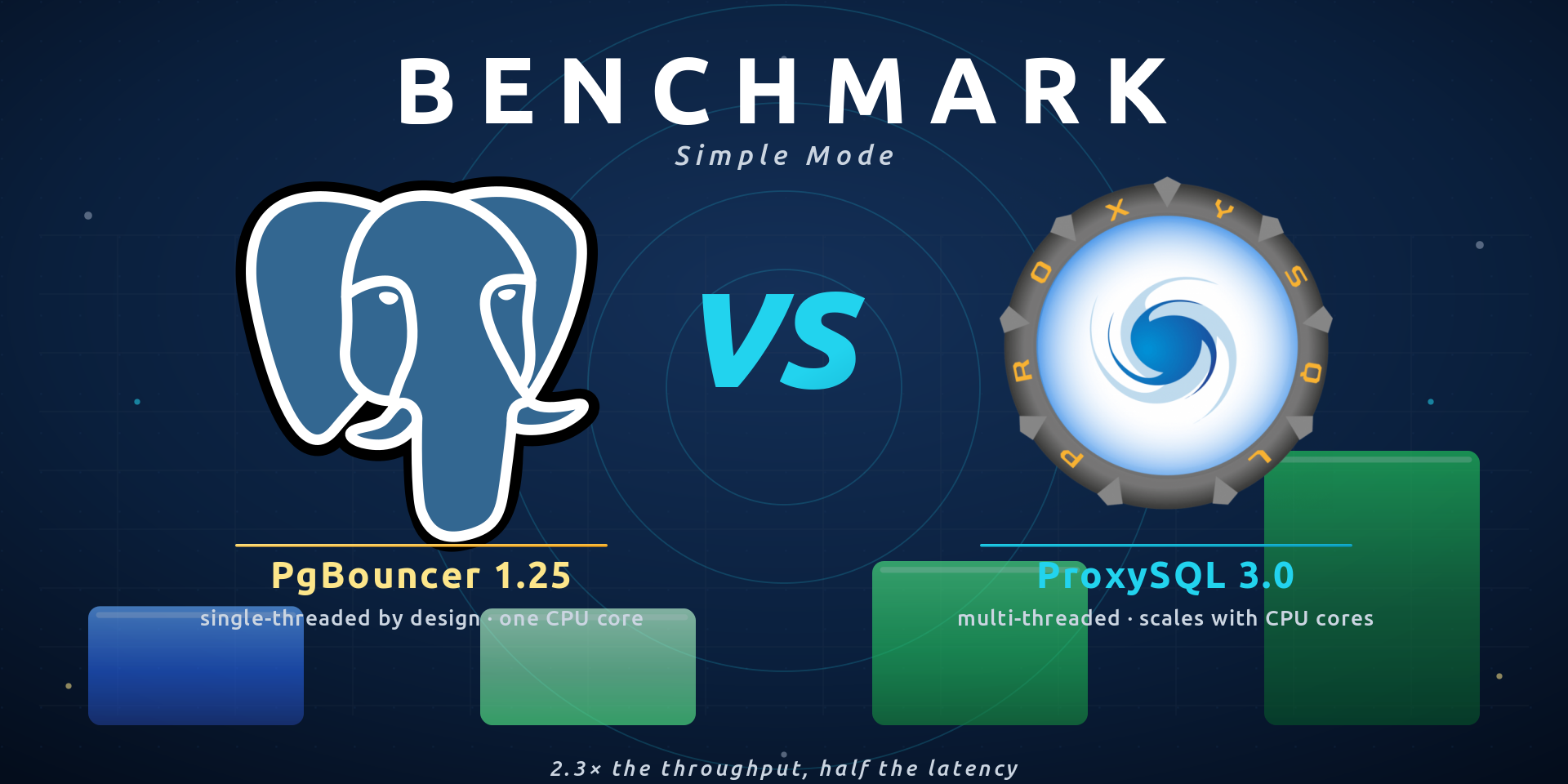
Benchmarking the PostgreSQL middle tier under SSL — PgBouncer vs ProxySQL (1/2/4 workers), same hardware, same 4KB SELECT workload. pgbench simple mode.
ProxySQL 3.0.8 extends session-variable tracking beyond parsed SET statements by consuming MySQL session-state notifications from backend OK packets.
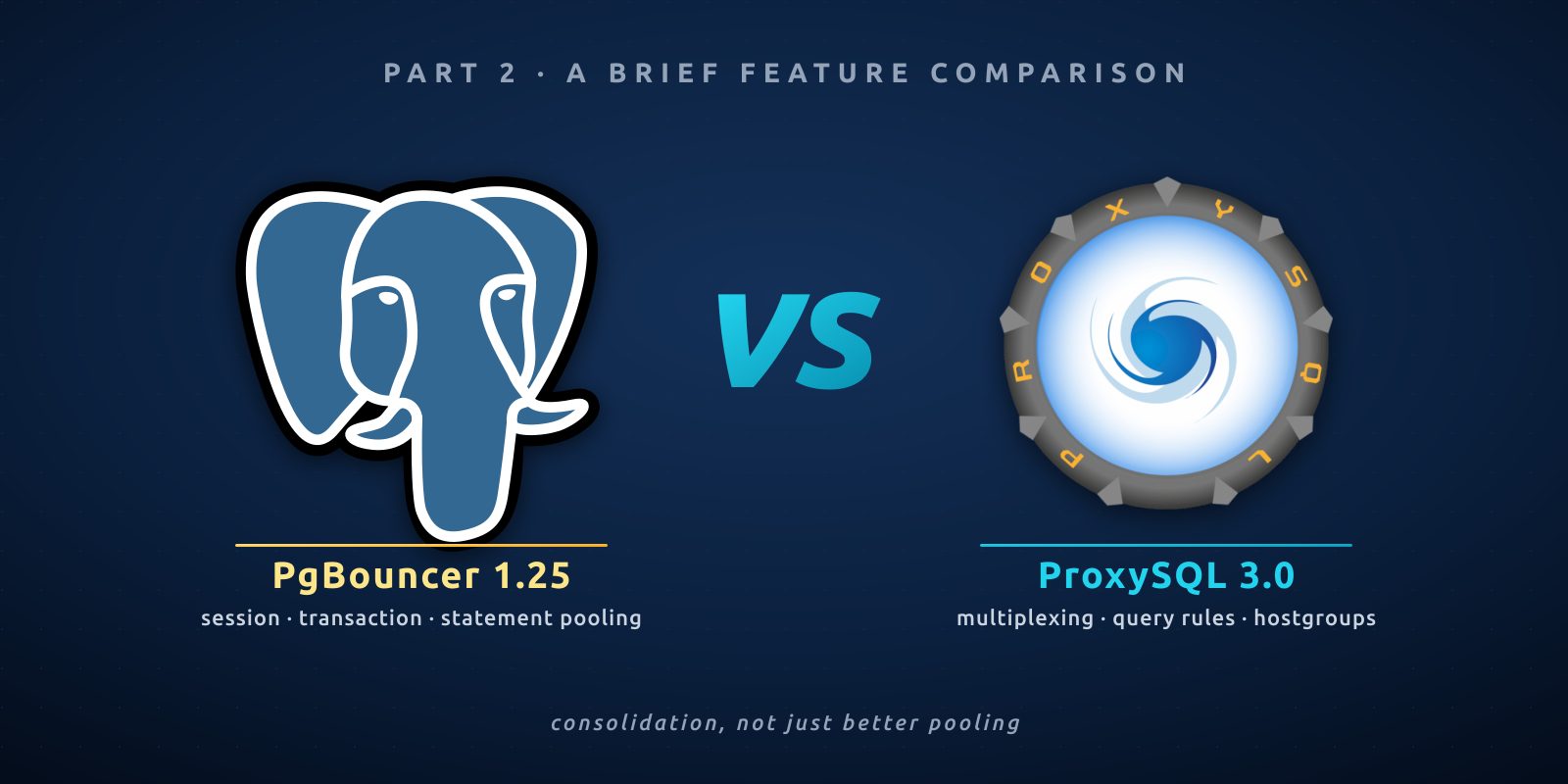
Part 2 of the PgBouncer to ProxySQL series. A direct comparison of what each tool does, focused on responsibilities PgBouncer deliberately leaves alone and that ProxySQL pulls into the proxy itself. Reflects ProxySQL 3.0.8 and PgBouncer 1.25.1 at time of writing.
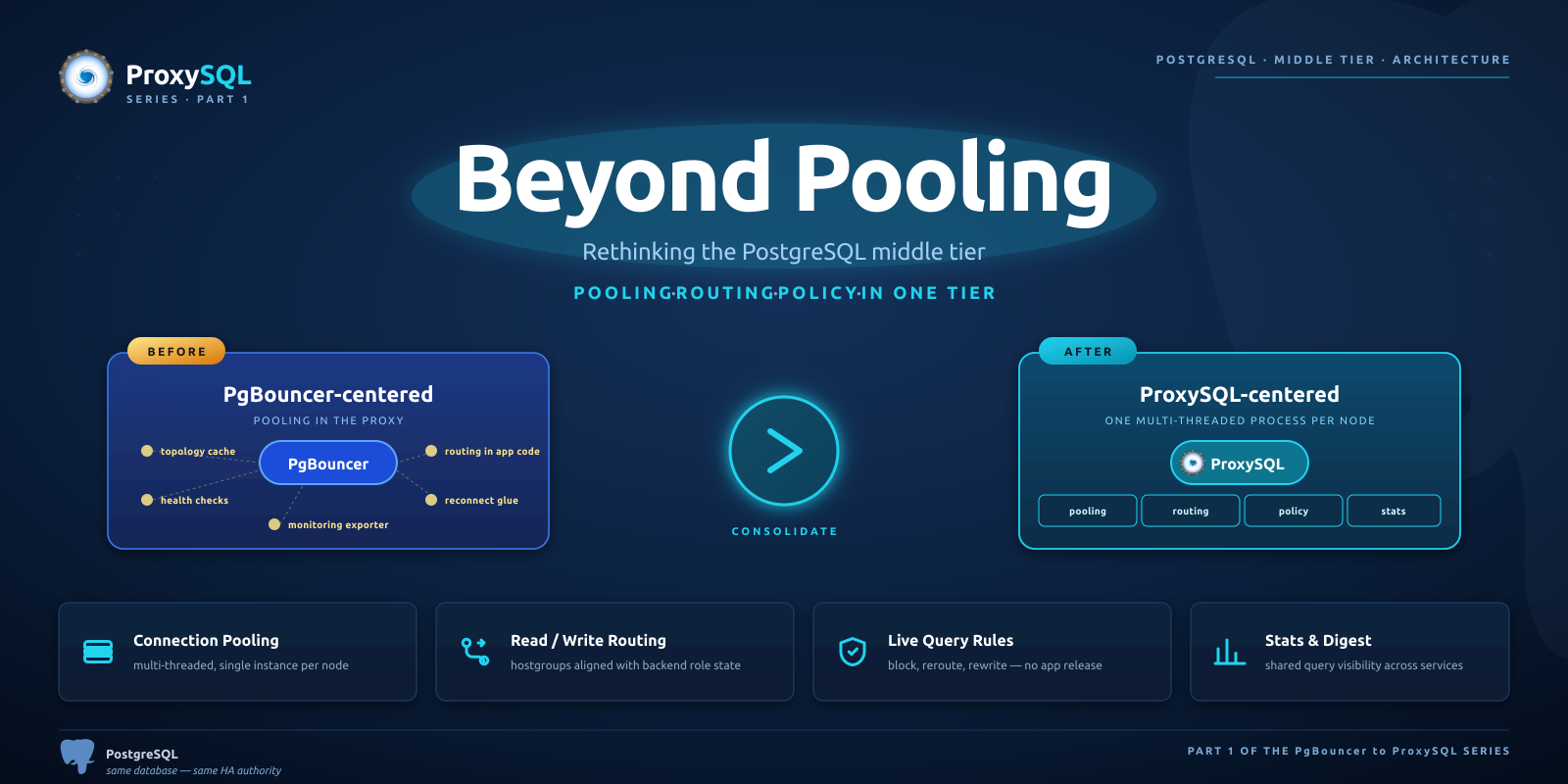
Part 1 of the PgBouncer to ProxySQL series. Focus: architecture and operator model, not a full feature matrix. Reflects ProxySQL 3.0.7 and PgBouncer 1.25.1 at time of writing.
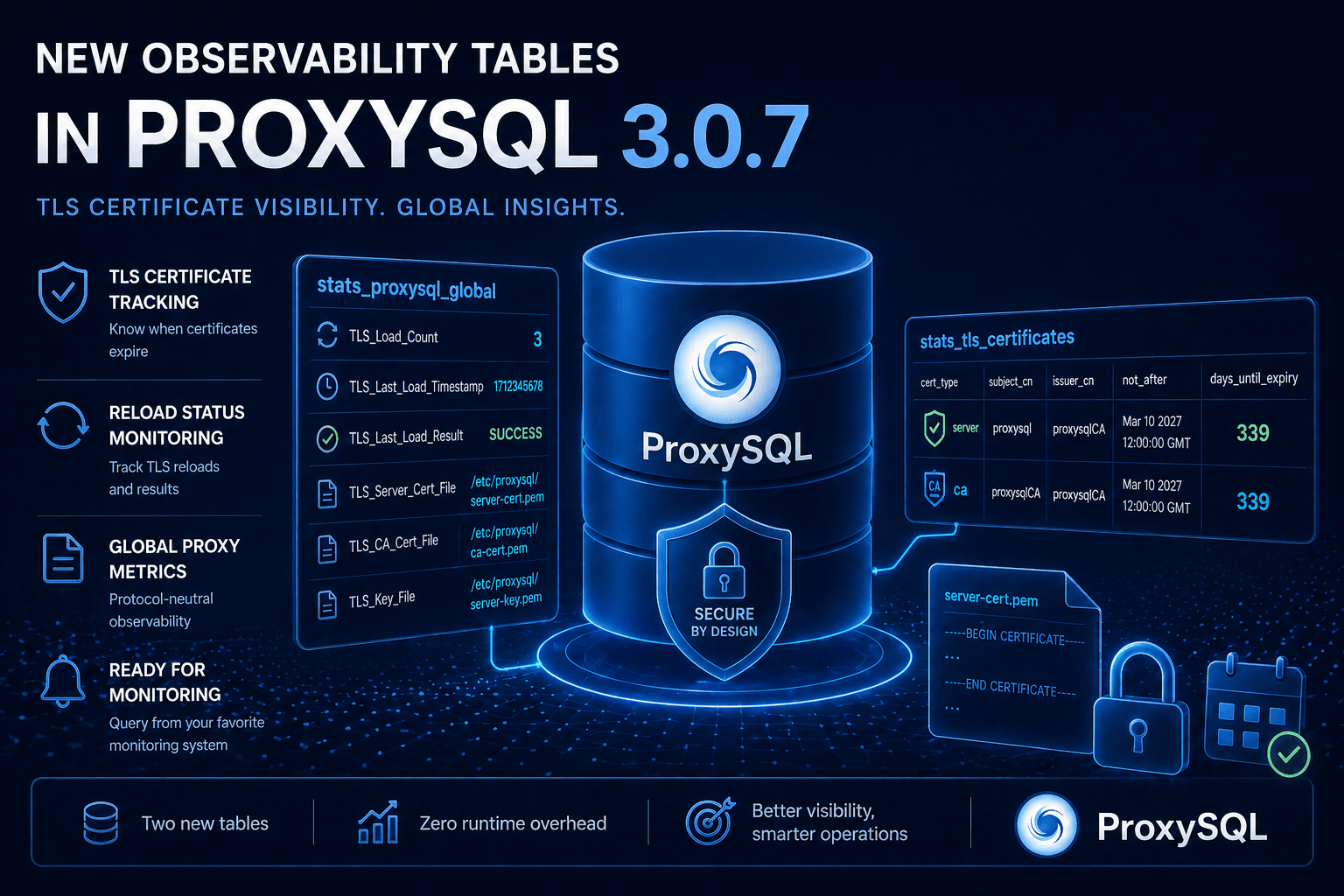
ProxySQL 3.0.7 introduces two new statistics tables for TLS certificate tracking and global proxy metrics.
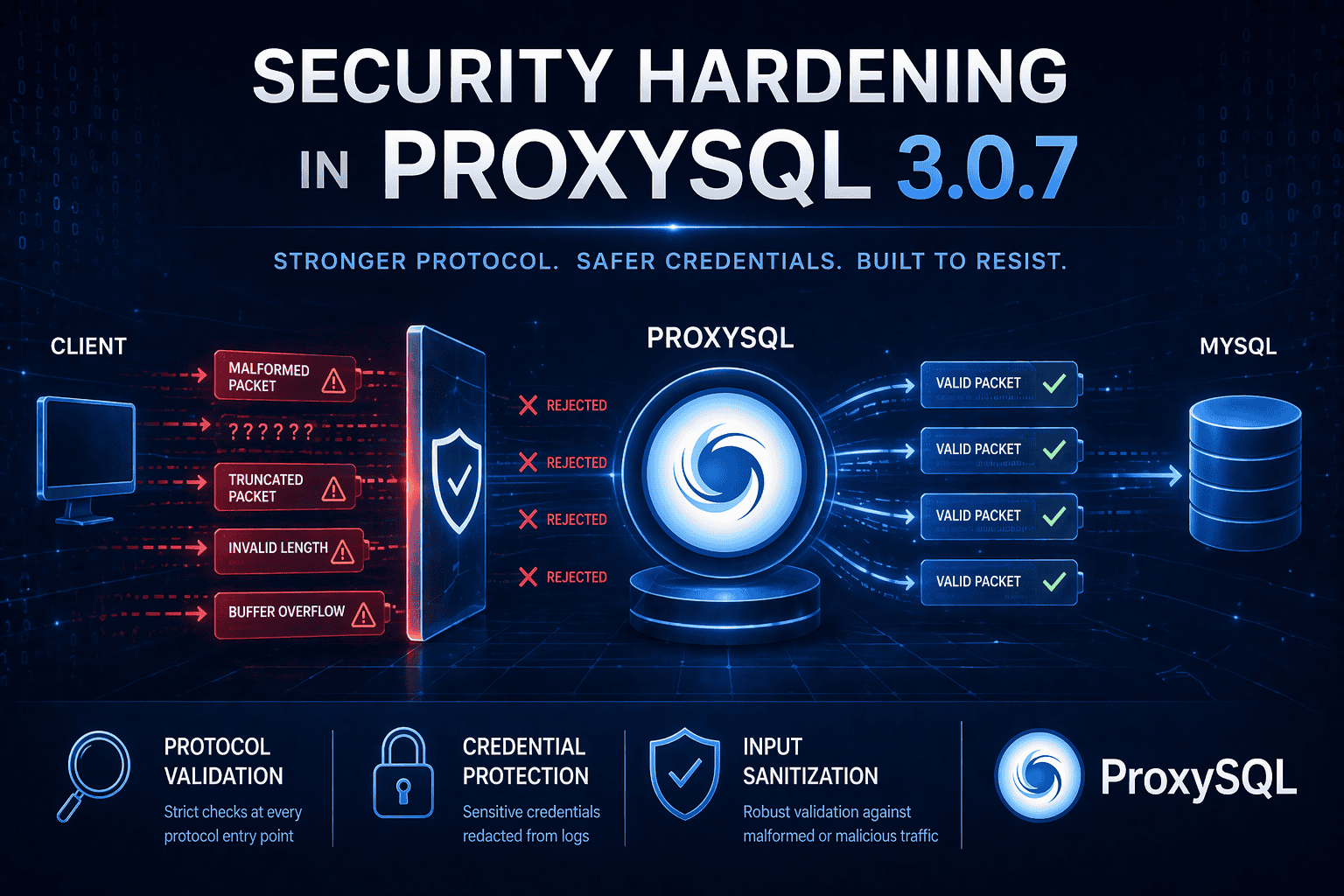
A deep dive into the protocol hardening, credential protection, and validation improvements in ProxySQL 3.0.7.
How ProxySQL for PostgreSQL handles unplanned primary failure
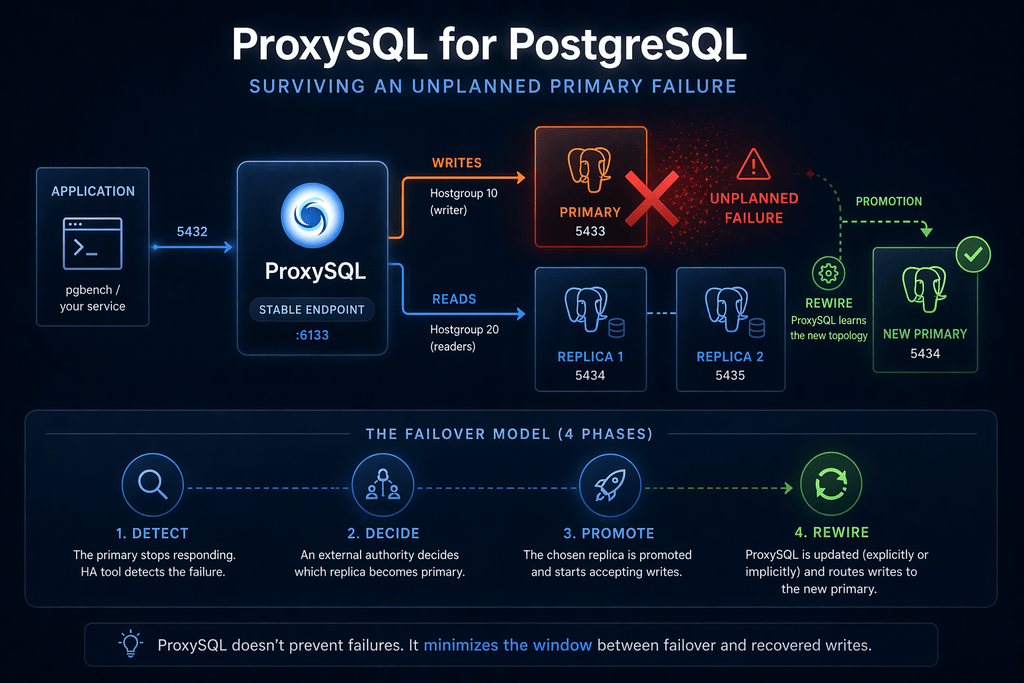
How ProxySQL for PostgreSQL handles unplanned primary failure
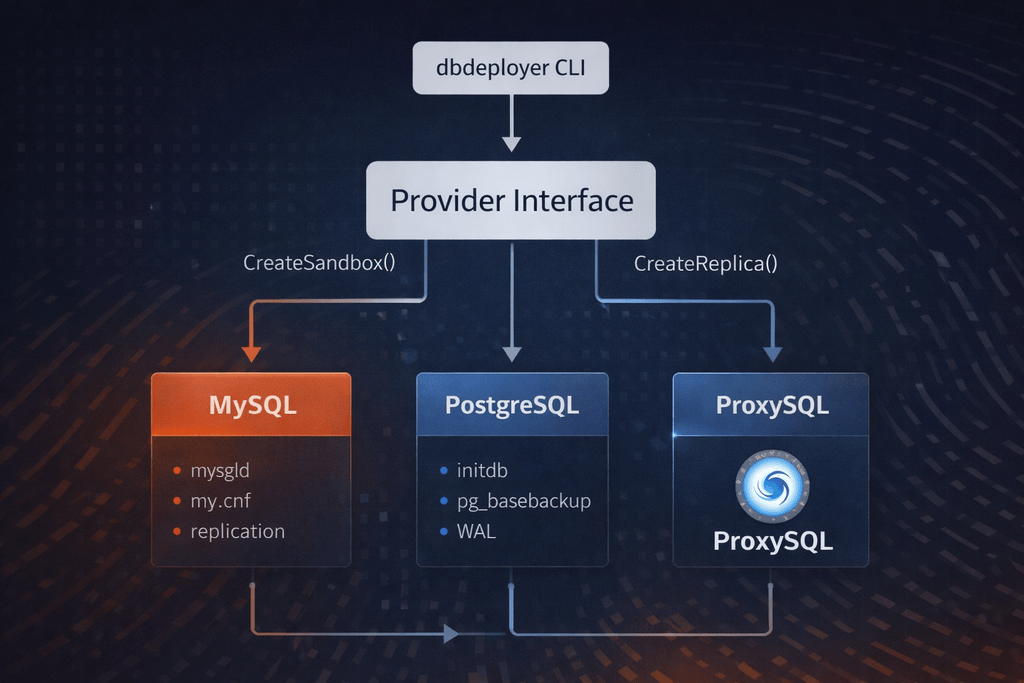
A deep dive into the Provider interface that makes dbdeployer multi-database. How we abstracted MySQL, added PostgreSQL, and made it extensible for any database.
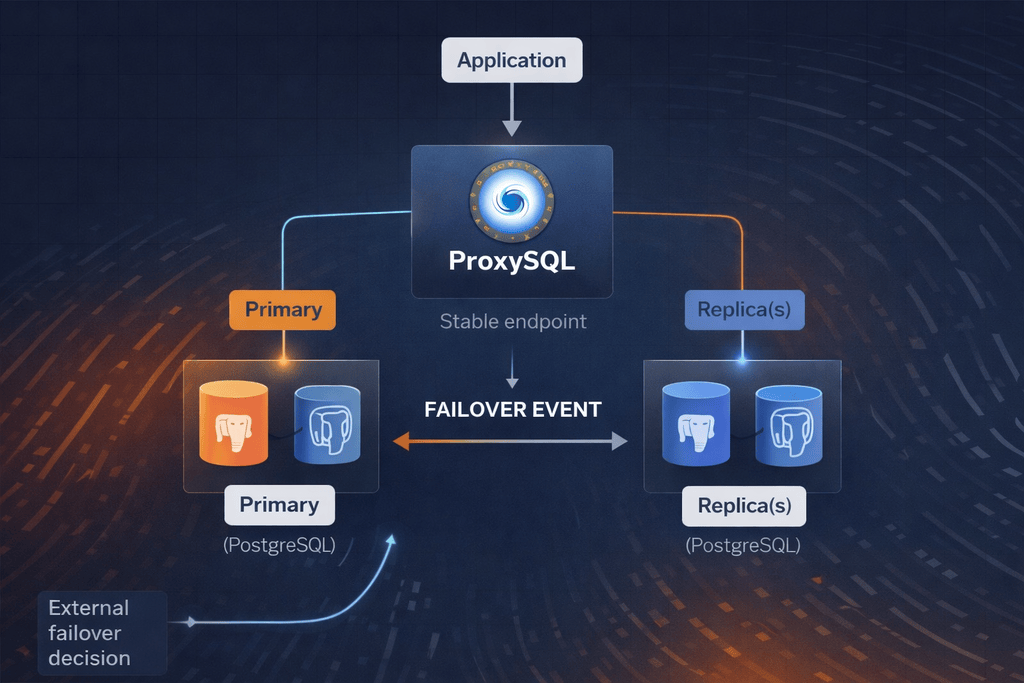
First blog post of a series about ProxySQL for PostgreSQL and how it handles failover
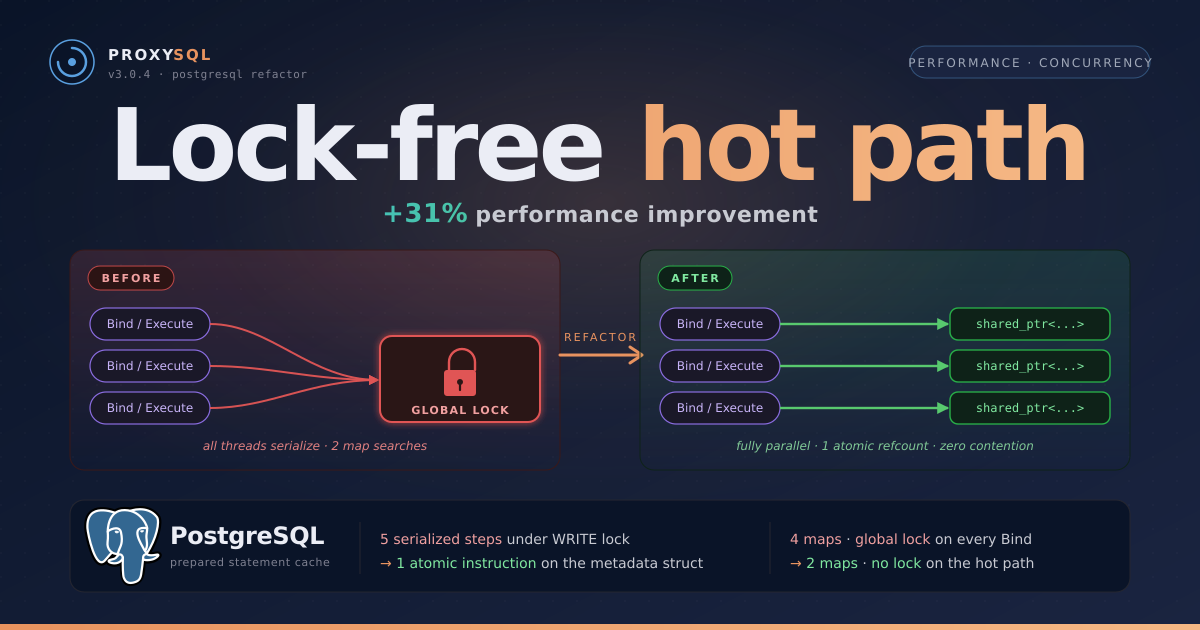
A walk-through of the PostgreSQL prepared-statement cache refactor — what was slow, why, and how the redesign turned a contended path into a contention-free one
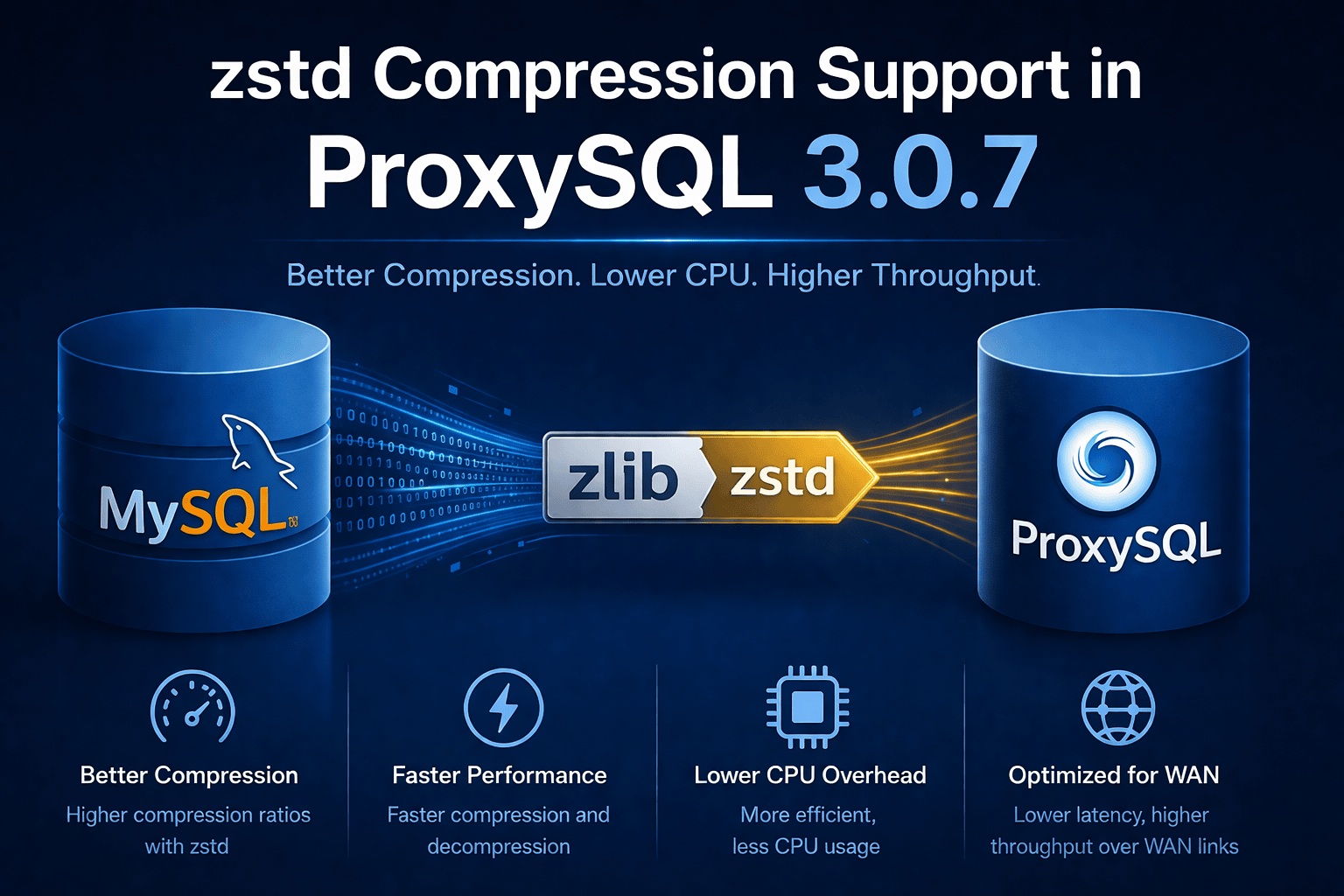
ProxySQL 3.0.7 adds native zstd compression for the MySQL protocol, offering better compression ratios and lower CPU overhead compared to zlib.
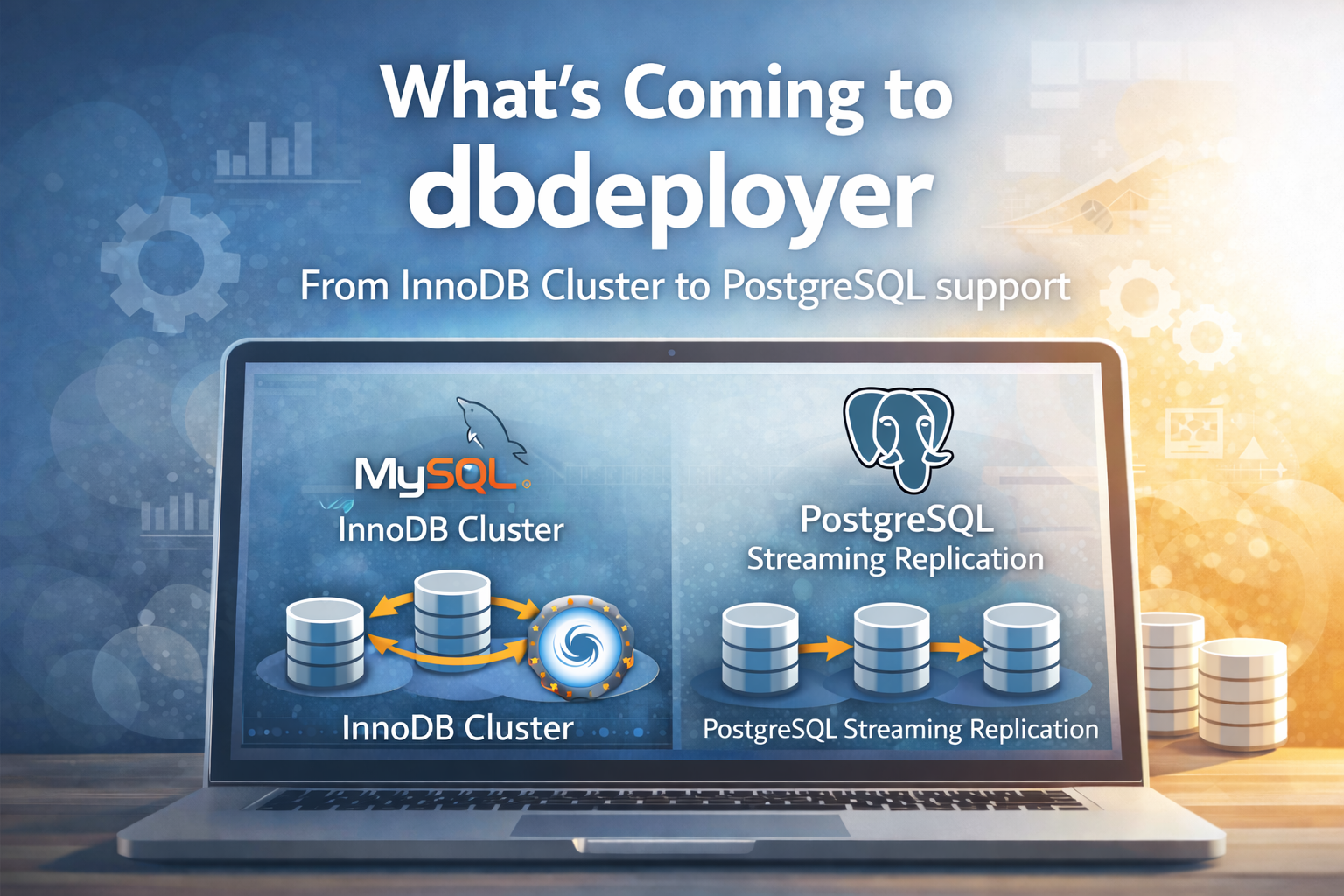
A preview of the features we're shipping — from InnoDB Cluster to PostgreSQL support. This is just the beginning.
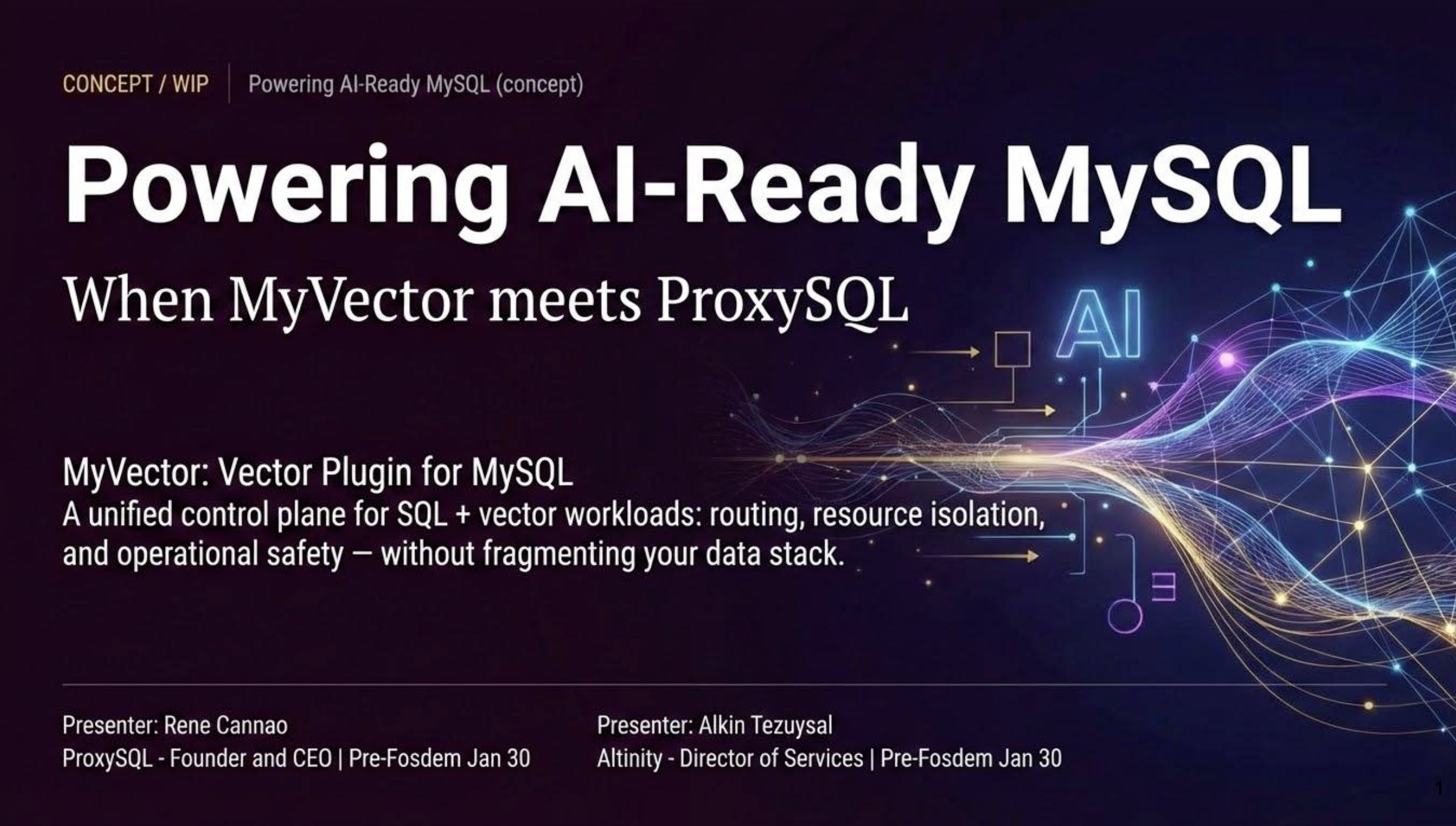
As AI workloads become standard in modern applications, engineering teams face a familiar dilemma: MySQL is already the system of record, but vector search typically requires bolting on a separate database. MyVector and ProxySQL solve this without fragmenting your data stack.
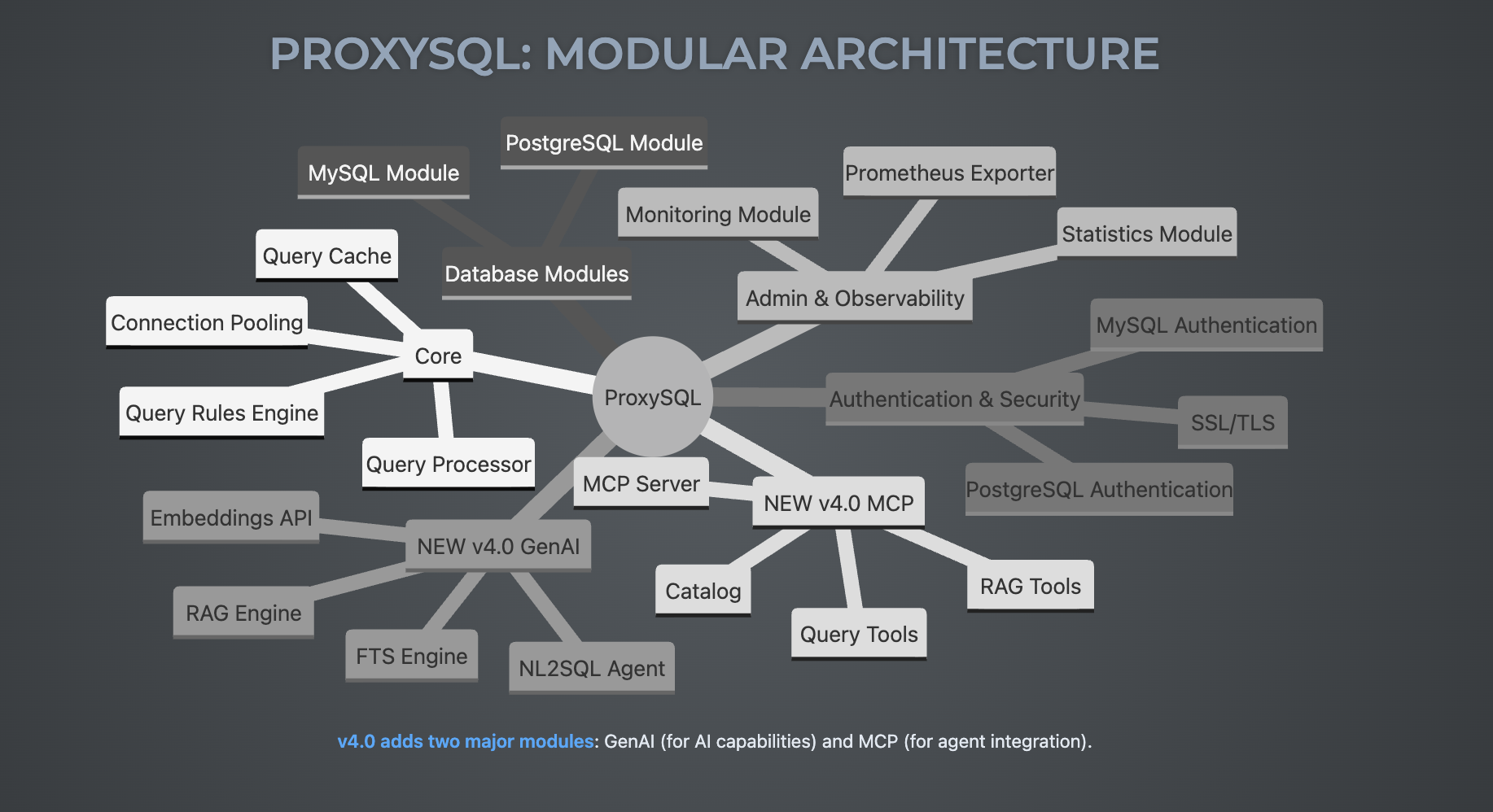
ProxySQL v4.0 adds a transparent AI layer at the proxy — RAG pipelines, NL2SQL, and an MCP server for AI agents — without touching your database or application code.
Showing 1–20 of 68 posts